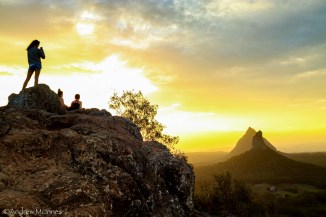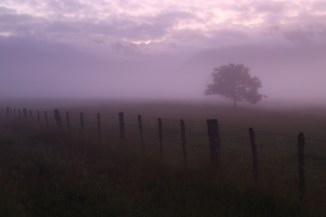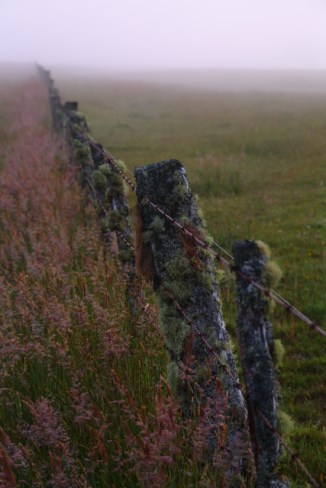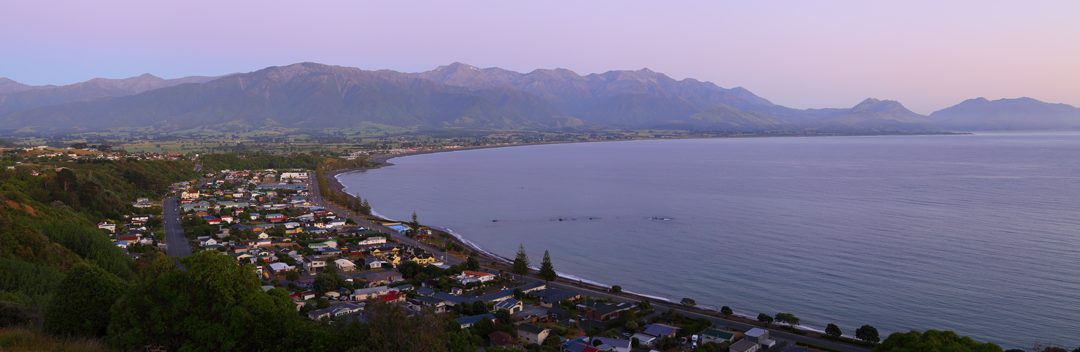
The Caloundra area and Pumicestone Passage on the Sunshine Coast offer numerous peaceful scenes. This particular one was enjoyed with a picnic dinner.

Golden Beach 2AM-003962 ©Andrew McInnes. All Rights Reserved.
The Caloundra area and Pumicestone Passage on the Sunshine Coast offer numerous peaceful scenes. This particular one was enjoyed with a picnic dinner.

Golden Beach 2AM-003962 ©Andrew McInnes. All Rights Reserved.
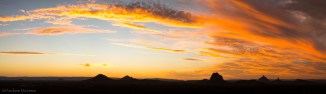
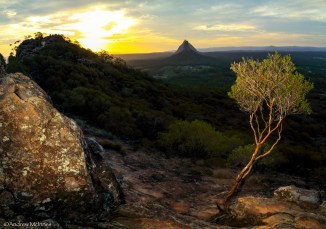
A fiery sunset over volcanic plugs (remnants of volcanic activity that occurred 25-27 million years ago), known as the Glasshouse Mountains on the Sunshine Coast of Queensland. At just over an hour from Brisbane, these hills are well worth a visit.
This is a 12 image panorama stack.
This is an additional placeholder post. Click the Edit link to modify or delete it, or start a new post. If you like, use this post to tell readers why you started this blog and what you plan to do with it.
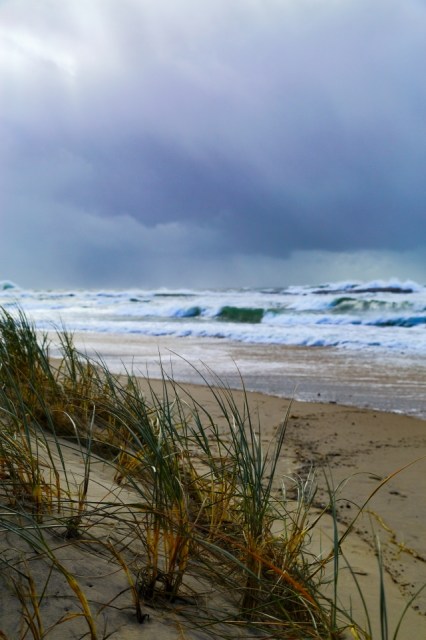
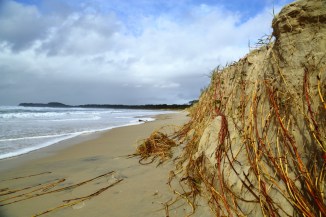
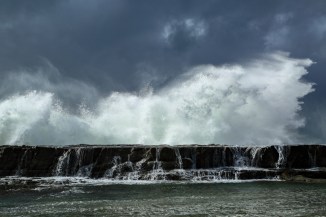
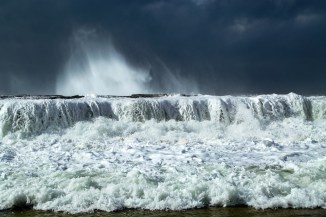
A recent overnight visit to Iluka and we were presented with a considerable storm system and some fantastic, and rapidly changing, light.
Cheers 🙂
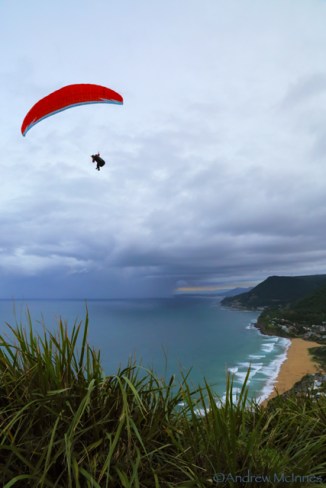
A very powerful weather system is impacting a considerable portion of the east coast of Australia this weekend. Here is the Bureau of Meteorology link and the ABC link.
Here are three images: the first is an aerial image (drone) at Scarborough showing clear weather conditions before the system began to directly impact this section of the Illawarra Coast, and the remaining two images from Bald Hill show the first wave of weather making its way to the coast.

Scarborough-2AM-0014. ©Andrew McInnes. All Rights Reserved.

Bald Hill 2AM 2771-2772 Panorama. ©Andrew McInnes. All Rights Reserved.
Here’s to hoping the farmers and graziers get good rain where needed.
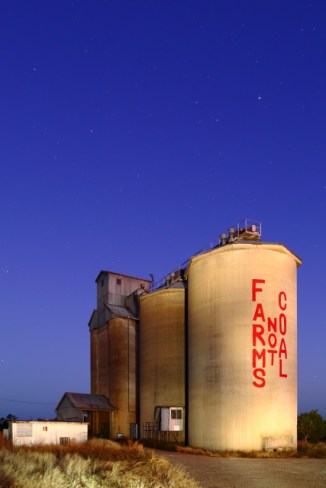
‘nuf said?
The Liverpool Plains is a prime food and fibre producing area that is under imminent threat from several coal mines – at least one of which, the Shenhua Watermark mine, is foreign-owned (Chinese). These companies seek to rape and scar the land, deplete and contaminate aquifers, then pack up and leave once the destruction is no longer financially viable. Never mind that there are farmers, you know, living breathing hard-working people, with families and dreams, enduring incredible stress as they seek to remain being outstanding stewards of the land they sweat for. How and why our political “representatives” allow this is beyond me – I suppose it goes along with their belief in continued economic growth year on year. Well, let’s inform them that exponential growth is unattainable and to seek it is ignorantly irresponsible (but I guess it is politically astute?).
I am not against mining, per se, however I do have issues with “the commons” being over-extracted for the profits of a few whilst the landholder has little recompense for the invasion, and the people of this nation see very little direct financial benefits. As another roadside sign in the area states: “Wrong mine, wrong place.”

A pre-dawn light painting at Breeza, on the Liverpool Plains, NSW. Breeza 2AM-001230 ©Andrew McInnes.
I hope you enjoyed these images.
Cheers 🙂
Day 9-11. Makarora and Fox Glacier etc, South Island – New Zealand.
Onwards…
More from Otago, plus some from West Coast. As is the case with all holidays, the end comes too soon.
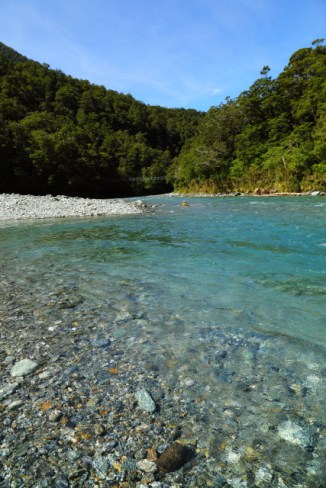
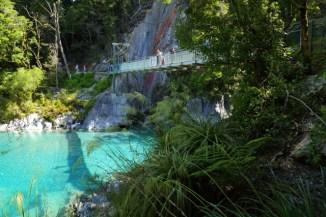
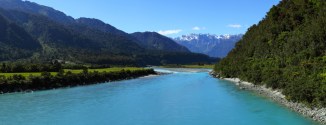
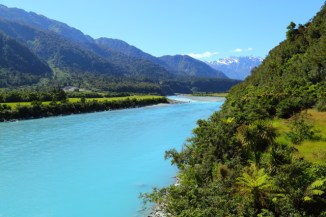
This last post includes images from Blue Pools on the Makarora River, the Whataroa River, Fox Glacier, and Lake Hawea (near The Neck).
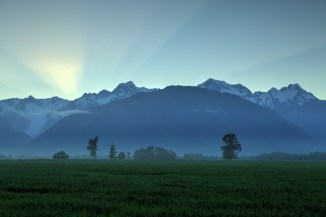
Dusk settles over the Southern Alps at Makarora.
The stunning, and frigid, Blue Pools.
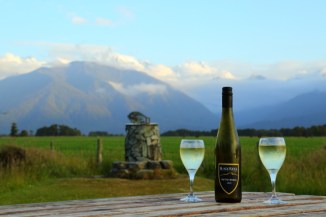
Happy hour 🙂
Cold beers and conversation in and alongside the Makarora River.
A Tui (Prosthemadera novaeseelandiae), in the honeyeater family, foraging on New Zealand flax (Phormium sp.).
Dawn over the Southern Alps at Fox Glacier – includes Aoraki / Mount Cook.
I hope you enjoyed this and the previous posts of my images from a fantastic holiday in New Zealand.
Cheers 🙂
Ah, to have more time to explore and be awed by Fiordland National Park! And a revisit in late winter/early spring is in order too.
We ventured along the Te Anau – Milford Highway, to hike the Key Summit, a day-hike portion of the Routeburn Track, beginning at The Divide. Spectacular!
Here is a portion of the view from the end of Key Summit.

Routeburn Track 2AM 0796-0800 panorama. ©Andrew McInnes
Hiking (“tramping” in NZ) up to Key Summit.

Routeburn Track 2AM-000788. ©Andrew McInnes
A loo with a view – sort of.

Routeburn Track 2AM-000814. ©Andrew McInnes
Driving into Fiordland National Park in the morning we noticed a field of lupins and thought that it would be worth a look on the way out that evening. What a beautiful scene it turned out to be!
This is Cascade Creek, along the Te Anau-Milford Hwy.

Cascade Creek 2AM 0827-0832 Panorama. ©Andrew McInnes

Cascade Creek 2AM 0842-0843 panorama. ©Andrew McInnes

Cascade Creek 2AM-000819. ©Andrew McInnes

Cascade Creek 2AM-000844. ©Andrew McInnes

Cascade Creek 2AM-000863. ©Andrew McInnes

Cascade Creek 2AM-000865. ©Andrew McInnes

Cascade Creek 2AM-000889. ©Andrew McInnes

Cascade Creek 2AM-000835. ©Andrew McInnes

Cascade Creek 2AM-000818. ©Andrew McInnes
I hope you like lupins 😉
Thanks for viewing my images.
Cheers 🙂
Day 7 – The spectacular Catlins area, South Island – New Zealand.
Spectacular, diverse, ever-changing – we drove through beautiful rural scenes, along a rugged coast, saw a few more yellow-eyed penguins, sea lions, a couple of lighthouses, and low tide allowed us to walk among a 180 million year old petrified Jurassic forest – one of only three such accessible fossil forests in the world! All this and so much more we couldn’t fit in 😦
Nugget Point Lighthouse, built in 1869-70. A place of spectacular views, many rocky islets (The Nuggets), and much wildlife.

Nugget Point Lighthouse 2AM-0379-0744 panorama. ©Andrew McInnes

Nugget Point Lighthouse 2AM-000749. ©Andrew McInnes

Nugget Point Lighthouse 2AM-000754. ©Andrew McInnes

Nugget Point Lighthouse 2AM-000775. ©Andrew McInnes
To be able to view, and even walk among a petrified forest in the intertidal zone at low tide was remarkable. There are both stumps and fallen trees, petrified, with some growth rings plainly visible. This is but a sampling of the numerous specimens at Curio Bay.
Curio Bay is of international significance for its fossilised forest dating back to the Jurassic period. The tree fossils you see here are 160 million years old and the forest was alive when New Zealand was part of Gondwanaland. (source: The Catlins New Zealand website).

Petrified Forest – Curio Bay 2AM-000635. ©Andrew McInnes

Petrified Forest – Curio Bay 2AM-000631. ©Andrew McInnes

Petrified Forest – Curio Bay 2AM-000634. ©Andrew McInnes

Petrified Forest – Curio Bay 2AM-000665. ©Andrew McInnes

Petrified Forest – Curio Bay 2AM-000656. ©Andrew McInnes
Four images of the Waipapa Point Lighthouse. This is the site of New Zealand’s worst civilian shipwreck. In 1881 the SS Tararua ran aground on Waipapa Reef and 131 of 151 passengers and crew died. The lighthouse, built after the disaster, stands as a poignant reminder. (source: Southern Scenic Route website).

Waipapa Point Lighthouse 2AM-000600. ©Andrew McInnes

Waipapa Point Lighthouse 2AM-000611. ©Andrew McInnes

Waipapa Point Lighthouse 2AM-000622. ©Andrew McInnes

Waipapa Point Lighthouse 2AM-000616. ©Andrew McInnes
I hope you enjoyed these images from a fascinating region of New Zealand.
Cheers 🙂
Days 5 and 6 – Moeraki and Dunedin.
Just outside the coastal town of Moeraki there are numerous large concretions, exposed and highly visible, lying along a stretch of Koekohe Beach. I thoroughly recommend reading more about them (here is a Wikipedia link).
Here are a series of images captured during our brief visit.

Moeraki Boulders 2AM-000526. ©Andrew McInnes

Moeraki Boulders 2AM-000500. ©Andrew McInnes

Moeraki Boulders 2AM-000496. ©Andrew McInnes

Moeraki Boulders 2AM-000517. ©Andrew McInnes

Moeraki Boulders 2AM-000533. ©Andrew McInnes

Moeraki Boulders 2AM-000549. ©Andrew McInnes

Moeraki Boulders 2AM-000538. ©Andrew McInnes
After a thoroughly enjoyable dinner washed down with a local amber ale at the Moeraki Tavern, I took these shots of the nearby harbour. We had hoped to also eat at the famed Fleurs Place restaurant another night but, alas, it was closed for a while over the Christmas break.

Fleurs Place – Restaurant 2AM-000598. ©Andrew McInnes

Moeraki Bay 2AM-000599. ©Andrew McInnes

Moeraki Bay 2AM-000593. ©Andrew McInnes

Moeraki Bay 2AM-000595. ©Andrew McInnes
A little further south is the city of Dunedin, where I have family heritage. We had a joyous visit with a cousin and her family, and she accompanied us on a lovely hike to see the Organ Pipes. “The Otago peninsula was formed entirely by volcanic activity and the tall polygonal columns featured on this walk are remnants of this past. As molten lava cooled slowly beneath the hardened crust, it contracted and formed geometrical cracks which propagated downwards as the mass cooled.” (source: NZ Tramper website).

The Organ Pipes 2AM-000567. ©Andrew McInnes

The Organ Pipes 2AM-000576. ©Andrew McInnes

The Organ Pipes 2AM-000577. ©Andrew McInnes

The Organ Pipes 2AM-000578. ©Andrew McInnes
After the organ pipes we wanted to visit the world’s only mainland breeding colony of Royal Albatross so we ventured out to Taiaroa Head on the Otago Peninsula. Unfortunately we did not see any albatross, but there was a rather active colony of gulls. Whilst wandering along an observation path, we heard, then saw, quite an aerial commotion… upon further observation we saw a Black-backed Gull being harassed by several smaller gulls – the larger gull had apparently “kidnapped” a chick and was heading off with it. For those who may be a bit squeamish about natural history, the following two images may concern you.

Black-backed Gull 2AM-004861. ©Andrew McInnes

Black-backed Gull 2AM-004882. ©Andrew McInnes
Looking down the steep cliffs of Taiaroa Head I was entranced by bull kelp (Durvillaea species) as it seemingly twirled and shimmied in a whimsical tango with the ocean.

Overlooking the spit within Otago Harbour – our lunch spot on our way back to Moeraki.

Harrington Point 2AM-000580. ©Andrew McInnes
Back to Mouraki, we were thrilled and fortunate to observe, up close, a few Yellow-eyed Penguins (Megadyptes antipodes)! These New Zealand endemics (native) are purported to be among the worlds rarest penguin species.

Yellow-eyed Penguin 2AM-004739. ©Andrew McInnes

Yellow-eyed Penguin 2AM-004780. ©Andrew McInnes
Thanks for visiting – I hope you enjoyed these images.
Cheers 🙂